


Peek: Secret Compliment
4.5292.00 Reviews
App Specs
- Version
- 2.5.1
- Updated On
- License
- Free
- Downloads
- 50,000+
- Developer
- Dyve Studios
- Categories
- Social
- Platform
- Android
Screenshots



 Analysis by AppCompare
Peek: Secret Compliment is a social app built around a simple but surprisingly revealing idea: ask people what they really think of you without putting them on the spot. I found it more interesting than a standard messaging app because its appeal comes from the short pause before an answer appears. You are not just posting a question; you are inviting friends to react in a way that feels lighter and less confrontational than a direct conversation.
That format also explains the app’s limits. Anonymous feedback can be playful, flattering, and useful, but it can also be vague or uncomfortable. My overall view is that Peek works best as a casual social layer for people who already have an active circle, not as a replacement for honest conversations or a complete community platform.
How the anonymous poll experience feels in everyday use
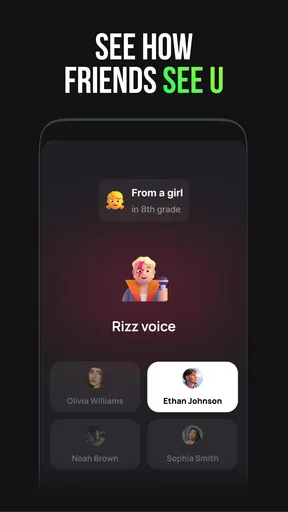
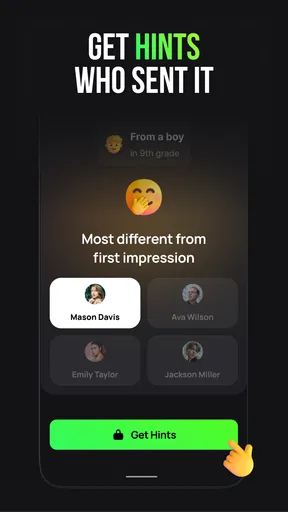
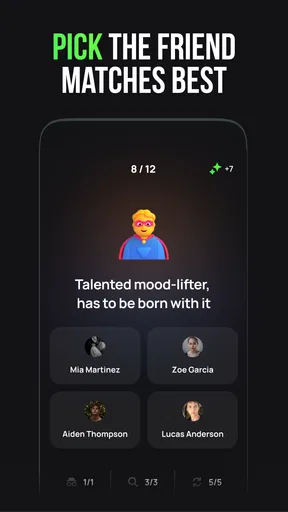
The main attraction is the ability to create polls about yourself and let friends respond anonymously. In practice, that changes the tone of a question. Asking “What is my best quality?” feels different when people do not have to attach their names, and a question about first impressions can produce more candid reactions than a public comment thread.
I would use it during a quiet moment with friends, after meeting a new group, or when planning a lighthearted activity for a chat. For example, someone organizing a weekend outing could ask which role suits them best, while a student might ask classmates which personal strength stands out most. The value is not in treating each answer as a scientific verdict. It is in noticing patterns and starting conversations from them.
The app belongs naturally in the social discovery space. Unlike a regular group chat, it gives people a prompt and a reason to respond. Unlike a public social network, it keeps the interaction focused on a small social circle rather than an endless feed. That narrow purpose is one of its strongest qualities: when the question is well chosen, the experience is quick and easy to understand.
Its presentation also makes it approachable for younger users and casual users who do not want to learn a complicated platform. Peek is free to download, carries an Everyone age rating, and runs on Android versions from 8.0 onward. Those details make it accessible to a broad range of phones, although the quality of the experience still depends heavily on whether your friends are willing to participate.
Why the format can reveal more than a normal post
Anonymous responses remove some of the social pressure that appears in ordinary comments. A friend who would avoid praising you directly may feel comfortable choosing an answer in a poll. That can make the results feel more spontaneous, especially when the questions are specific rather than fishing for compliments.
Worth Reading Before You Choose

EA SPORTS FC Mobile 26 Is a Bigger Football Game, but It Takes Time

Flipboard Shows What News Apps Must Do Beyond the Feed

Switching to Android Auto Means Rethinking Your Driving Routine

Google Calendar Makes a Crowded Week Easier to Manage

Ludo King Makes the Most of the Minutes Between Plans

Baby Panda World Brings Quick Play to Modern Phones, but Its Game Library Feels Busy
I found that the best prompts are narrow enough to answer quickly but open enough to show personality. “Which role would I take in a group project?” is more useful than “Do you like me?” because it invites an observation instead of demanding reassurance. Questions about habits, strengths, first impressions, or group dynamics can create more meaningful results without becoming too serious.
There is also a useful distinction between asking for an opinion and asking for a judgment. A prompt such as “What do I bring to a friend group?” encourages positive reflection. A prompt such as “What is wrong with me?” can turn the same anonymous system into a source of unnecessary anxiety. I recommend treating the wording as part of the feature, not as an afterthought.
One practical tip is to run a small sequence of related polls instead of one broad question. Start with a positive prompt, follow with a question about a social habit, and finish with something playful. This gives the responses context and reduces the temptation to read too much into one isolated answer. It also keeps the session from feeling like a demand for validation.
What makes it different from chats, stories, and ordinary polls
Most messaging apps are built for direct replies, while story tools usually emphasize quick public reactions. Peek sits between those formats. The poll provides structure, but the anonymous element changes how people approach it. That makes the app more personal than a generic voting sticker and less exposed than a public post.
The trade-off is that it does not offer the same depth as a conversation. If a response surprises you, you may not know who wrote it or what situation they had in mind. A regular chat is better when you need clarification, advice, or accountability. A traditional poll is better when the subject is an objective group decision, such as choosing a date or selecting a restaurant.
I would also choose an established social network over Peek when my main goal is to reach a large audience or maintain a public profile. Peek is more focused and intimate. Its strength is not broad discovery; it is the small moment of curiosity between people who already know one another.
That distinction matters before installing it. If your friends are not interested in answering personal prompts, the app may feel empty regardless of how well the interface works. It is not a tool that creates a social circle by itself. It gives an existing circle a new activity.
Small habits that improve the quality of responses
Anonymous feedback becomes more useful when you design the setting carefully. I would avoid posting a long series of polls at once, because friends may tap through them without thinking. A few well-timed questions are more likely to produce thoughtful answers than a flood of prompts.
It is also worth separating playful polls from sensitive ones. If a question touches on appearance, popularity, relationships, or personal insecurity, I would only share it with people who are likely to respond responsibly. Anonymity can encourage honesty, but it can also make careless answers easier. The app’s casual tone should not be mistaken for a guarantee that every response will feel good.
Another useful approach is to compare answers with your own expectations rather than ranking them as right or wrong. If several people describe you as organized while you think of yourself as spontaneous, that difference is interesting. It may reveal how your behavior looks from the outside, even if it does not define your personality.
For group use, I would establish an informal rule before starting: keep questions respectful and do not use the results to embarrass someone. This is especially important when several people share the same social space every day. A playful poll can strengthen a group, but a badly worded one can create tension that lasts longer than the activity.
Where the experience becomes less convincing
The biggest weakness is built into the anonymous format. A response may be honest, but it is not automatically reliable. You cannot always tell whether an answer represents a considered opinion, a joke, or a momentary reaction. Without names or context, even a positive result can be difficult to interpret.
That uncertainty is manageable for light questions, but it becomes more serious when users ask for criticism or reassurance. Someone who is already worried about how others see them may focus on one negative response and ignore several positive ones. I would not recommend using Peek as a way to settle personal doubts or make important decisions about relationships.
There is also a participation problem. The app is most enjoyable when several friends respond, yet every person needs a reason to open the poll and take part. If your circle prefers direct messages or rarely engages with social prompts, the experience can quickly become repetitive. The app cannot solve low engagement through its concept alone.
Its free entry point is welcome, but in-app purchases ranging from $0.99 to $19.99 per item mean that some extras may involve spending. I would begin with the free experience and decide whether the app has become part of my routine before considering any purchase. For an occasional novelty, paying is harder to justify than it would be for a service I use every day.
Another limitation is that anonymous interaction can blur responsibility. If a poll produces a hurtful answer, the recipient may have no practical way to ask for an explanation. That is not necessarily a reason to avoid the app, but it is a reason to keep the questions proportionate to the trust within the group.
Who should try it, and who should skip it
I think Peek is a good fit for friend groups that already enjoy quizzes, personality questions, and playful social challenges. It is particularly suitable for users who want a low-effort way to start a conversation without writing a long post. Someone joining a new class, team, or group of friends may also find it useful for breaking the ice, provided the questions stay friendly.
It can work well for a birthday week, a group trip, or a relaxed evening when everyone wants something interactive. One person can post a prompt, friends can answer when convenient, and the results can become a natural topic for discussion. The app is at its best when the poll is an invitation to talk rather than the final answer.
I would be more cautious about recommending it to anyone who is highly sensitive to anonymous criticism or who expects precise, accountable feedback. It is also not the right choice for formal surveys, serious relationship discussions, or decisions where every response needs a clear source. A shared document, direct chat, or conventional poll would be more dependable in those situations.
Parents and younger users should remember that an Everyone rating describes the intended age suitability, not the emotional quality of every possible response. The safest experience still comes from thoughtful prompts and a trusted audience. If a user is uncomfortable with the idea that friends may answer without being identified, the central feature is likely to feel more stressful than entertaining.
The developer, Dyve Studios, has kept the concept focused rather than turning it into a general-purpose social network. That focus is helpful for people who want one clear activity. At the same time, users looking for a full messaging system, creator tools, or a broad public community will probably find the app too narrow.
What the current release means for prospective users
The current version is 2.5.1, and the app has built a modest but visible audience, with more than 50 thousand installs. Its average rating sits at 4.5 from roughly 756 ratings, alongside around 290 written reviews. Those figures suggest that the central idea connects with many users, while the written feedback is still small enough that personal experience may vary considerably by friend group.
I would interpret that reception carefully. A social app can receive positive reactions from people whose circles are active, while remaining uninteresting for someone whose friends do not participate. The rating tells me that the concept works for a meaningful portion of users; it does not remove the participation test that every new social app faces.
Compatibility with Android 8.0 and later is another practical advantage for people using older devices. Since the app is free to start, there is little financial risk in trying it with a few carefully chosen prompts. The sensible approach is to test it during a real social occasion rather than judging it from an empty account.
Before sharing anything personal, I would also decide what kind of feedback I actually want. A vague prompt creates vague results, while an overly sensitive prompt can create unnecessary tension. Thinking through that choice beforehand is more important here than it would be in a standard entertainment app because the output concerns how other people perceive you.
My verdict after weighing the fun against the uncertainty
Peek succeeds because it turns a familiar social question into a quick activity. The anonymous poll format can make friends more willing to answer, and the best prompts reveal small differences between how you see yourself and how others see you. I especially like it as a conversation starter: the results are most valuable when they lead to laughter, curiosity, or a more direct exchange afterward.
Still, I would not treat anonymous responses as objective truth. The lack of context is both the app’s hook and its central weakness. It creates freedom, but it removes accountability. That makes the experience entertaining for light questions and much less suitable for emotionally loaded ones.
My recommendation is specific: try it if you have a responsive group of friends and enjoy playful social experiments, but start with low-stakes prompts and keep expectations modest. Skip it if you want dependable feedback, a large public network, or a replacement for direct communication.
In the end, I see Peek as a small, focused social tool rather than an essential everyday platform. When used with the right audience, it offers a fresh way to ask for reactions and discover how friends perceive you. Its value comes from the conversation around each answer, not from the anonymous answer alone.
Pros
- Anonymous compliments can encourage positive interactions.
- Simple interface makes sending compliments quick and accessible.
- Useful for sharing kind thoughts without revealing your identity.
- Can help users discover how others perceive their personality.
- Lighthearted concept suited to casual social engagement.
Cons
- Anonymous messages may still create uncertainty about the sender.
- Some compliments can feel generic or lack personal context.
- App value may depend heavily on having an active friend network.
- Users may receive unwanted or uncomfortable messages.
- Privacy settings and notification controls should be checked carefully.
FAQs for Peek: Secret Compliment
What is Peek: Secret Compliment, and how does it work?
Peek: Secret Compliment is a social app focused on sending and receiving anonymous compliments. After creating a profile and joining the relevant social circle, users can share kind messages without immediately revealing their identity. The app is designed around positive interactions, but the exact features available may depend on your school, community, contacts, location, and the current version of the service.
Is Peek: Secret Compliment completely anonymous?
Peek is built around anonymous compliments, but users should not assume that every interaction is permanently or technically untraceable. The app may collect account, device, usage, and moderation information, and certain clues or optional features could make a sender identifiable. Before posting anything personal, review the app’s privacy policy and settings, and avoid sharing sensitive details that could identify you or someone else.
Is Peek: Secret Compliment safe for teenagers and younger users?
The app may appeal to teenagers because it encourages feedback from friends and classmates, but anonymous messaging can also lead to bullying, unwanted attention, or inappropriate content. Parents and younger users should check the listed age requirement, privacy controls, reporting tools, and community rules before downloading. Do not share private information, and report or block any message that feels threatening or uncomfortable.
Can I delete, report, or block unwanted compliments on Peek?
Most anonymous social platforms provide tools for reporting inappropriate messages, blocking users or interactions, and managing notifications, although the exact options can change between app versions. If you receive harassment, threats, or offensive content, use the in-app reporting feature and keep evidence when appropriate. Deleting a message from your screen may not necessarily remove related records from the service.
Is Peek: Secret Compliment free to download and use?
Peek may be available as a free download, but some features can include advertising, optional purchases, subscriptions, or limits on how many compliments you can send or reveal. Check the Google Play Store or Apple App Store listing for the current pricing details before installing. Also review subscription terms carefully, since deleting the app usually does not automatically cancel an active subscription.


